Category: Money Management

  • 30-Day Money Saving Challenge: A Simple and Fun Way To Be Richer

    30-Day Money Saving Challenge: A Simple and Fun Way To Be Richer

    Do you constantly live paycheck to paycheck? Do you always find it hard to save money? Join these money-saving challenges today. You’ll see how you can turn the seemingly daunting task of saving money into an exciting and achievable adventure.


    To manage our money better, saving is one of the very first steps to take. Without saving a portion of our income, it would be difficult or even impossible to take control of our finances and achieve our financial goals. These goals include paying off debts, investing, allocating funds for emergencies, and planning retirement.

    If you’re always struggling to save money, or if you find it hard to save constantly, or if you’re finding ways to save more and faster, embarking on a money-saving challenge can be an effective method.

    Table of Contents

    30-Day Money Saving Challenge

    You may start by participating in a 30-day challenge. It offers several advantages that make it an ideal starting point for individuals seeking to improve their financial habits:

    • The shorter duration provides a sense of attainability and urgency, making it easier to commit to the challenge.
    • The 30-day timeframe strikes a balance between immediate results and sustainability, allowing participants to witness tangible progress without feeling overwhelmed.
    • It introduces the concept of discipline and financial consciousness in a manageable and engaging manner.
    • The relatively shorter commitment minimizes the risk of burnout or losing interest, enhancing the likelihood of successfully completing the challenge.
    • The challenge turns the seemingly daunting task of saving money into an exciting and achievable adventure.

    Getting Started

    1. Set Clear Goals for the Challenge

    Before diving into the challenge, it’s essential to establish clear and achievable goals. Determine why you want to participate and what you intend to achieve by the end of the 30 days.

    Whether you’re saving up for an emergency fund, a vacation, or paying off debt, having a specific goal will motivate you to stay on track.

    2. Create a Budget for the Month

    Crafting a budget is the cornerstone of successful money management.

    Calculate your monthly income and allocate it across different categories, including essential expenses, discretionary spending, and savings.

    Having a detailed budget in place will help you identify areas where you can cut back and allocate more funds toward your savings goal.

    Whether you’re new to budgeting or wish to simplify your budgeting process, feel free to download our FREE monthly budget planner PDF.

    3. Identify Areas of Potential Savings

    Examine your spending habits and identify areas where you can make adjustments. This could include reducing dining out, curbing impulse purchases, or renegotiating subscription services. Even small changes in these areas can have a significant impact on your overall savings.

    If you need more money-saving ideas, check out these 15 frugal habits of debt-free people.

    Save More Easily with Fun 30-Day Money-Saving Challenges

    1. The Incremental Savings Approach

    Start with our 30-day money-saving challenges, which are tailored to various savings goals.

    Get Started Today!

    Download and print out our 30-day money-saving challenge PDFs for FREE.
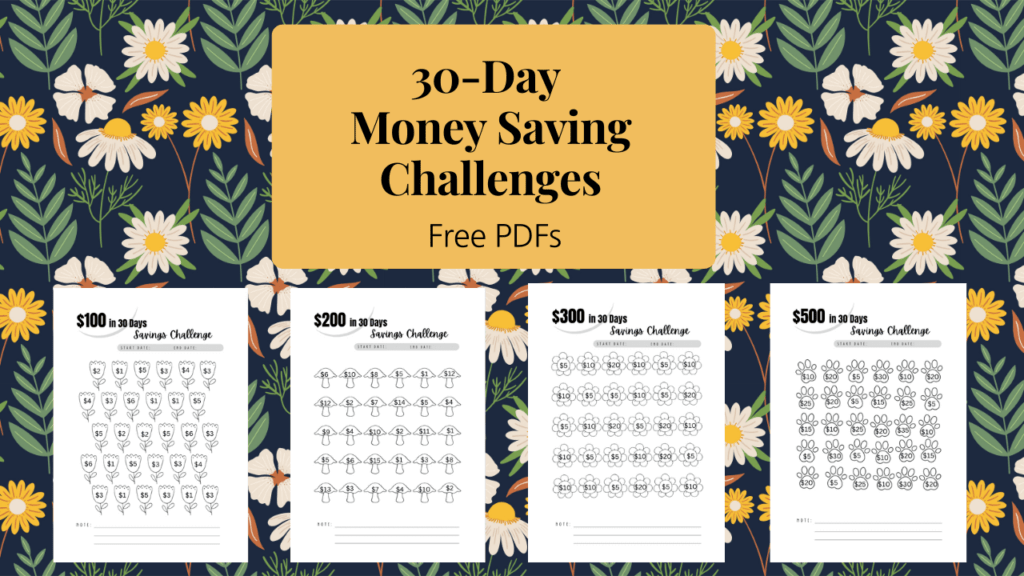
    money saving challenge pdf

    Depending on your income level and savings goal, choose whether you want to save $100, $200, $300, or even $500 in 30 days. Each day, you’ll contribute a specific amount to your savings and color your way to building your financial cushion.

    Congratulate yourself when you successfully complete the challenge at the end of the 30 days. Feel free to celebrate this milestone and reward yourself.

    However, don’t stop there. It takes time to build any new habit. Contrary to the myth that it takes only 21 days to develop a new habit, it’s probably more time-consuming than we thought.

    So after completing your first money-saving challenge, repeat it once more or level up by challenging yourself to save a bigger amount in the next 30 days.

    2. Level Up with 26-Week Challenges

    After you successfully conquer the 30-day money-saving challenge 2 or 3 times, take yourself to the next level.

    Our 26-week challenges are the perfect fit for those seeking a more substantial savings boost. These challenges span over half a year and you may choose from the challenges of saving $1,000, $3,000, or $5,000 in 26 weeks.

    Level Up!

    Get a collection of 9 fun challenges, a rainy-day fund page, and a customizable page to create a fund jar of your choice.

    money saving challenges pdf

    Extending the timeframe can create a sustainable and genuinely transformative savings habit.

    3. Take It to the Next Level

    If you’re committed to this challenge, the practice of saving money will gradually become easier and part of your daily routine.

    Then it’s time to take part in a “Buy Essentials Only” challenge or a “No Spend” challenge.

    The former requires you to commit to purchasing only the necessities for 30 days; while the latter involves cutting out all non-essential spending for a month.

    These challenges will not only skyrocket your savings but also provide insight into what you truly need versus what you simply want.

    4. Create Rainy Days Fund and Other Funds

    In addition to these challenges, I also encourage you to consider allocating some of your savings toward specific funds.

    A rainy day fund, for instance, can serve as a safety net during unexpected financial emergencies.

    You can also create funds for future goals, such as a travel fund, a home renovation fund, or a retirement fund. By giving each fund a purpose, you’ll have a clear destination for your savings.

    Conclusion

    Money-saving challenges are a fun and exciting way to kickstart your new journey toward financial stability.

    By setting clear goals, crafting a budget, and participating in various challenges, you’ll not only amass savings but also develop a healthier relationship with money.

    The journey to financial freedom begins with a single step – are you ready to take it?


    Have you tried any money-saving challenges? How has it changed your money habits? I encourage you to share your thoughts and experiences in the comments below. Your insights could inspire others who are on a similar journey toward financial fitness.

    Save for later ⤵️

    money-saving challenges
  • 9 Worst Financial Mistakes People Make and How to Correct Them

    9 Worst Financial Mistakes People Make and How to Correct Them

    We all strive for financial stability and success, yet even the most well-intentioned individuals can make critical mistakes. Whether it’s poor budgeting, investing errors, or failing to plan for the future, these missteps can have a significant impact on our financial well-being. In this blog post, we’ll discuss the nine most common financial mistakes people make and provide practical tips on how to correct them.


    Contents

    Introduction

    I wish I had started to realize the importance of financial literacy 10 or even 20 years earlier.

    “Why weren’t we taught in school?” “If someone had taught me when I was young, I would be in a more comfortable position financially now.” Sometimes, I can’t help to regret doing so little to manage my money in the past.

    Nevertheless, late is always better than never. Even though it would be easier and faster for me to attain financial freedom if I had started earlier, there’s no point crying over spilled milk.

    I’d rather focus on what I can and should do now to make up for the lost time.

    Having realized my past mistakes, I hope others, young people especially, can become financially savvier by avoiding the worst financial mistakes that people commonly make.

    Common Financial Mistakes

    #1 Neglecting Proper Budgeting

    Are you currently following a budget? Do you have a clear understanding of your income and expenses?

    Many people do not have a budget and stick to it. This is one of the most prevalent financial mistakes.

    Without a budget, it’s challenging to manage your money effectively. If you do not have a budget to follow, you may find yourself overspending or struggling to meet financial goals.

    #2 Not Having an Emergency Fund

    Do you have an emergency fund in place to cover unexpected expenses?

    Life is unpredictable. Unexpected emergencies can happen at any time, such as a medical issue, a car repair, or even a sudden job loss.

    If you do not have an emergency fund, you may be compelled to rely on credit cards or loans, which can potentially lead to debt.

    #3 Not Prioritizing Debt Repayment

    Are you actively working on paying off your debts? Do you often carry balances on credit cards?

    When debt lingers without a focused repayment plan, it can accumulate interest and fees over time. Consequently, you will have to pay more than the initial borrowed amount, making it difficult to break free from the debt cycle.

    In particular, high-interest debt like credit cards and personal loans can eat into your finances. Ignoring debt or only making minimum payments can keep you trapped in a cycle of debt.

    Moreover, high levels of debt can have a negative impact on your credit score, affecting your eligibility for loans and favorable interest rates in the future.

    #4 Neglecting Retirement Planning

    Are you actively saving for retirement?

    Retirement may seem far off if you’re young. However, the earlier you start saving, the more time your investments have to grow and the more you can benefit from the snowball effect of compounding interest.

    Neglecting retirement planning can lead to financial insecurity in your golden years. You may find yourself struggling to cover basic living expenses, unable to pursue the activities you’ve dreamed of, and worrying about outliving your savings.

    #5 Overlooking the Importance of Financial Education

    Do you actively seek out financial knowledge and stay informed about personal finance matters?

    Without a solid understanding of personal finance, you’re more susceptible to making poor decisions that could have far-reaching implications.

    By adequately educating yourself about basic financial knowledge, you can manage your money wisely, make informed investment choices, and make strategic decisions to build a strong financial foundation.

    #6 Neglecting Investment

    Are you actively investing for the future?

    Neglecting to invest or not investing enough is a significant financial mistake. Your money can grow significantly through investments. But if you overlook the importance of investment, you will miss the opportunity to harness of the power of compound growth and allow money to work for you while you sleep.

    Investments can play a pivotal role in helping you achieve long-term financial goals, such as funding education, buying a home, or ensuring a comfortable retirement.

    #7 Giving in to Impulsive Buying

    Do you often make impulsive purchases that deviate from your budget?

    Giving in to impulse purchases can disrupt even the most meticulously managed budget. It’s essential to control these urges to ensure you’re not overspending on non-essential items.

    #8 Spending Excessively on Housing and Vehicles

    Do you spend a significant portion of your income on a house or car that may be beyond your means?

    Investing in housing and vehicles may be important, but overspending on these assets can strain your budget and limit your ability to save and invest for the future. High mortgage payments or auto loans can consume a substantial portion of your income, leaving little room for other important financial goals like saving, investing, or emergencies.

    It’s crucial to strike a balance between comfort and affordability to ensure a stable financial foundation.

    #9 Running Up Credit Card Debt

    Do you carry high balances on your credit cards, leading to accumulating interest?

    Credit cards and borrowing can be convenient, but unchecked use can quickly spiral into a cycle of debt.

    Credit cards often come with high interest rates. If you fail to pay your credit card bills promptly, the balance will grow rapidly. Relying on credit cards or frequently borrowing money can lead to a cycle of debt, making it challenging to achieve your financial goals.

    Save for later ⤵️

    worst financial mistakes

    How to Correct Financial Mistakes

    How many of the above describe you? If none of them, congratulations! I envy and admire your financial literacy.

    But if you’re making a few of these mistakes like how I used to be in the past, let’s see how you can correct them:

    #1 Create a Budget and Stick to it

    Start by tracking all of your income and expenses for a few months to get a clear picture of your financial habits. Then, create a comprehensive budget that includes essential expenses, savings, and even some discretionary spending.

    Review and adjust your budget regularly to make sure that you’re on track.

    #2 Set Up an Emergency Fund

    Make it a priority to establish an emergency fund with enough money to cover 3-6 months’ worth of living expenses.

    Keep this fund in a separate account that’s easily accessible but not too tempting for everyday spending. Gradually contribute to it until you reach your goal.

    #3 Prioritize Paying Off Debts

    Create a plan to tackle your debts. First, prioritize paying off high-interest debt, like credit cards while making minimum payments on lower-interest debt.

    Once you’ve paid off one debt, roll the money you were paying on it into the next debt. Known as the “debt snowball” or the “debt avalanche,” this method can help you make significant progress.

    #4 Start Saving for Retirement

    Start contributing to a retirement account as soon as possible. If your employer offers a retirement plan with a matching contribution, take full advantage of it because it’s essentially free money.

    Increase your contributions over time and consider seeking professional advice to ensure your retirement plan aligns with your goals.

    Also, take advantage of this retirement calculator to estimate how much you need to save to retire comfortably, and plan accordingly to achieve your savings goal.

    #5 Educate Yourself About Personal Finance

    Invest time in learning about personal finance. There are numerous resources available, including books, online courses, podcasts, and financial advisors.

    Stay informed about economic trends, investment strategies, and financial planning techniques. The more you know, the better equipped you’ll be to make sound financial decisions.

    #6 Start Engaging in Investment Activities

    Make active efforts to learn about different investment options, such as stocks, bonds, mutual funds, and real estate. Start by investing in low-cost, diversified funds.

    Consider consulting a financial advisor to create a personalized investment strategy based on your risk tolerance, goals, and time horizon.

    Prioritizing investment education and taking calculated steps toward investing can unlock the potential for your money to multiply and secure your financial well-being down the road.

    #7 Implement a Cooling-Off Period

    Before making a purchase, take a step back and evaluate if it aligns with your budget and long-term goals.

    Give yourself a cooling-off period for significant purchases. If you still want the item after a waiting period, it’s more likely to be a conscious decision rather than an impulsive one.

    #8 Place Practicality Above Luxury

    Ensure that your housing costs (including mortgage/rent, property taxes, and maintenance) don’t exceed 25-30% of your monthly income.

    For vehicles, aim to spend no more than 15% of your income on car-related expenses. Prioritize practicality and functionality over luxury to keep these costs manageable.

    #9 Reduce Credit Card Usage

    Create a budget that allows you to pay off credit card balances in full each month. If you have existing credit card debt, allocate extra funds toward paying it down systematically.

    If you must borrow, explore and prioritize lower-interest options, and have a clear repayment plan in place to prevent debt from spiraling.

    Also, take steps to improve your understanding about interest rates, terms, and the impact of debt on your overall financial health. By practicing responsible borrowing and managing credit wisely, you can avoid the pitfalls of debt accumulation and maintain a better financial health.

    Conclusion

    Money management is an essential life skill that we need to secure our current and future financial well-being. Undoubtedly, it’s best to start learning and implementing proper strategies to manage our money at an early age.

    Having said so, it’s never too late to start addressing money matters seriously. Reflect honestly on any financial mistakes we have committed and take active steps to correct them, we’ll be well on our way to a more secure future.


    Have you faced any of these financial challenges? What steps have you taken to correct them? I encourage you to share your thoughts and experiences in the comments below. Your insights could inspire others who are on a similar journey toward financial fitness.

  • Retirement Savings: The Magic Number Needed to Retire Comfortably

    Retirement Savings: The Magic Number Needed to Retire Comfortably

    Retirement planning is a universal concern that transcends borders, cultures, and languages. The question of “How much do I need to save to retire comfortably?” echoes across the globe, driving individuals to seek a financial formula that ensures a secure and fulfilling retirement. In this comprehensive blog post, we will dive into the intricacies of retirement savings, explore universally applicable retirement principles, discuss alternative savings strategies, and address the ever-relevant query: Is it ever too late to start saving for retirement?


    Table of Contents

    Introduction

    How much do I need to retire? I wish I had asked this question and taken the initiative to find out the answer in my 20s or 30s.

    Seriously, regardless of your age, and even if you love your job so much that you wish and plan to work until your 80s or 90s, retirement planning is still a must.

    Why? Because there are too many unpredictable things in life, and because there are too many things that are beyond our control.

    For example, we can’t control our life expectancy. I don’t wish to live that long, but what if I live until 100 years old?

    Or, we may enjoy working, but circumstances may change in such a way (e.g. layoff, illness, etc) that we turn out to drop out of the job market.

    Save for later ⤵️

    retirement calculator retirement savings

    Financial Freedom

    Having said that, my definition of retirement is not doing nothing after retiring from my job. Instead, the retirement I aspire for is the freedom from worrying about not having enough money to live if I stop working.

    In other words, by retirement, I mean having enough savings and passive income to live without financial worry even if I don’t receive a paycheck at the end of every month.

    With that financial freedom, I can continue to work if I enjoy it and I can quit at any time if I have other life plans. I will have more financial resilience and flexibility.

    How Much Do I Need to Save?

    How much do I need to save to retire comfortably? This is, no doubt, the million-dollar question.

    But there isn’t a one-size-fits-all answer. The magic number varies because we all have different lifestyles, before and during retirement.

    This sum is influenced by a number of factors, including your present age, desired retirement age, anticipated expenses, and the quality of life you envision post-retirement.

    You may estimate how much you need for retirement with the help of a retirement savings calculator, which takes into account variables like inflation and life expectancy.

    Calculate How Much Retirement Savings You Need

    Retirement Calculator

    Retirement Calculator

    What You’ll Need for Your Retirement

    Common Retirement Rules

    #1 - The 4% Rule

    The 4% rule is a global staple in retirement planning. It involves fairly simple steps to implement: sum up all your retirement savings and investments and withdraw 4% of that sum in the initial year of your retirement.

    In subsequent years, you adjust the withdrawal amount to accommodate inflation. According to the rule, it is highly likely that retirees can sustain their finances for 30 years.

    For instance, for someone with a retirement portfolio totaling $1 million. In the first year of retirement, he/she would withdraw $40,000. Should the inflation and cost of living increase by 2% during that year, you'd grant yourself a 2% raise in the subsequent year, leading to a withdrawal of $40,800, and so forth for the 30 years to follow.

    #2 - The 25x Rule

    This rule adopts a more versatile approach, suggesting that your retirement savings should ideally amount to 25 times your planned annual expenses.

    For example, if you plan to spend $60,000 a year during your retirement, you should have $1.5 million in your retirement assets at the time you retire.

    By focusing on the total nest egg needed, this principle accommodates diverse lifestyles and spending patterns across the world.

    Save for later ⤵️

    retirement calculator to calculate savings needed to retire comfortably

    Do the Retirement Rules of Thumb Work?

    While the 4% Rule and the 25x Rule provide valuable starting points for retirement planning, they are not foolproof strategies. Both rules come with caveats that require careful consideration.

    Limitations of the 4% Rules:

    • Inflexible Assumptions: The rule assumes rigid annual spending increases based on inflation, not considering variations in portfolio performance or changes in expenses.
    • Market Uncertainty: Future market returns may differ from historical averages used in the rule's calculation, impacting the sustainability of the withdrawal rate.
    • Portfolio Allocation: The rule applies to a portfolio with 50% stocks and 50% bonds; deviations from this allocation may require adjustments.
    • Retirement Length: The rule assumes a 30-year retirement horizon, underestimating the needs of retirees with longer life expectancies.

    Limitations of the 25x Rules:

    • Variability of Expenses: It assumes consistent annual expenses throughout retirement, not accounting for potential fluctuations in spending.
    • Market Performance: Similar to the 4% Rule, the rule relies on historical market returns, which may not accurately predict future returns.
    • Assumption of Infinite Withdrawals: While the rule suggests indefinite sustainability, real-world market conditions and personal circumstances can impact long-term withdrawals.
    • Retirement Length: Like the 4% Rule, it might not fully accommodate retirees with life expectancies exceeding 30 years.

    Save for later ⤵️

    Retirement savings calculator

    Is It Too Late to Start?

    Did the "magic number" estimated using the retirement savings calculator take you by surprise? Does the number make you wonder if you have enough savings to retire and if it's too late to start saving?

    It's true that the earlier we start, the benefits of compound interest will be more pronounced. However, there's no need to panic even if you started late or haven't started at all.

    Instead, explore proactive steps you can take to speed up your savings and make up for lost time. Here are some ideas for you to consider:

    #1 - Trim Spending to Free Up Cash

    Making minor adjustments such as dining out less, prioritizing sale items, driving less, or considering downsizing your home can help you free up cash for savings. Consider these 7 saving tips to help you save effectively.

    #2 - Prioritize Paying Off High-Interest Debts

    Becoming debt-free is crucial for a comfortable and worry-free retirement. Therefore, making plans to pay off your debts, especially those incur a high interest, should be a priority. Here is a list of small habits you can develop to free up cash for this purpose.

    #3 - Consider Increasing Risk to Compensate for Lost Time

    If you're in a comfortable financial position, you may consider increasing risk, a financial adviser suggested. This might involve having a higher proportion of stocks in your investment portfolio compared to stable assets like bonds. However, if you're not prepared for the market's ups and downs, avoid investing in riskier assets.

    Although investing in stocks may potentially amplify your returns, keep in mind that high risk doesn't always guarantee high returns; it can also lead to losses.

    #4 - Supplement Your Retirement Savings With Side Hustles

    A side hustle is a flexible, part-time gig or venture that you can pursue alongside your main job or even during retirement. It's a fantastic way to supplement your retirement fund and increase your financial resilience.

    Side hustles provide an additional income stream, allowing you to put aside extra money for retirement or cover unexpected expenses.

    The beauty of side hustles is their flexibility. You can choose opportunities that align with your skills, interests, and available time. It could be freelancing, blogging, consulting, selling handmade crafts online, tutoring, driving for ride-sharing services, pet sitting, or even participating in the sharing economy.

    By dedicating a portion of the income generated from your side hustle directly to your retirement fund, you can significantly accelerate your savings. Moreover, some side gigs even have the potential of generating passive income in the long run.

    Conclusion

    Nevertheless, it's important to remember that no single retirement rule or magic number can perfectly predict every individual's unique circumstances.

    Retirement planning is a dynamic process that requires ongoing adjustments based on changes in lifestyle, market conditions, and personal goals.

    The key takeaway is that it's never too late to start. Whether you're in your 20s, 50s, or any age in between, the decisions we make today can significantly impact our retirement years.

    By understanding our financial goals, exploring various saving strategies, and seeking professional advice, we can work towards achieving the retirement we aspire to, even if we feel like we've started late.

    Disclaimer: Please note that the information provided in this blog post is intended for general informational purposes only. The content is not intended to be a substitute for professional financial or retirement planning advice.

  • Passive Income: How to Make Money While You Sleep

    Passive Income: How to Make Money While You Sleep

    In today’s fast-paced world, the concept of passive income has gained immense popularity. Passive income refers to the money earned regularly with minimal effort and active involvement. Unlike traditional jobs, where you trade time for money, passive income allows you to generate revenue even while you sleep. This article explores what passive income is and presents a range of ideas for different age groups and people with different expertise.


    Contents

    Yoko Sano, the author of the famous Japanese picture book The Cat That Lived a Million Times, wrote in an essay that she rejoiced when her doctor told her that she had only 2 years left.

    She walked into a Jaguar shop and bought a new Jaguar.

    Why? Because now she knew she was going to die in 2 years, she didn’t have to worry about money anymore.

    As a freelance writer and illustrator, she didn’t have a pension. She was always worried about not having enough money in case she lived until 90.

    So she always worked hard to save money until her doctor told her the diagnosis when she was 70.

    I can totally relate to her worry because I’m also a freelancer.

    Why Do We Need Passive Income?

    But even if you aren’t freelancing and even if you have solid savings, once you retire or lose your source of income, wouldn’t you feel worried seeing that your money only flows in one direction?

    I know I would hesitate to spend if my money only flows out and not in. Budgeting is hard because I don’t know how long I will live.

    I learned the concept of passive income quite late. But late is always better than never.

    Now I understand that passive income is always a good idea regardless of your profession, how much you earn, and how much you’ve saved.

    Whether you’re aiming to earn extra money to achieve whatever financial goals or retire without financial worries, you should consider finding ways to generate some passive income.

    Saving money is important, but savings alone is not enough. A smart money management strategy involves the aspects of frugality, building up your savings, as well as increasing your income.

    What is Passive Income?

    Passive income is income that comes in regularly with little or no direct effort required from the earner. We may generate a passive income from various sources, including investments, real estate, online businesses, and creative pursuits.

    It is different from active income, which we receive from an employment or business venture that requires our active and continuous participation and efforts.

    Common examples of passive income include interest on savings, rental received from leasing out a property, and stock dividends.

    The key idea behind passive income is to set up income streams that require an initial investment of time, money, or both and then continue to generate income with minimal involvement once those income streams are established.

    In essence, passive income is not necessarily easy and fast money. In fact, oftentimes, it generates little or no money at all when we first start out.

    It’s like sowing a seed, and before we can enjoy the fruits, we need to take care of our tree consistently. However, once your tree starts to bear fruits, you’ll get to reap the fruits for many years to come.

    Think long-term, when it comes to passive income.

    Save for later ⤵️

    passive income ideas

    24 Passive Income Ideas

    For Students

    #1 – Rent out textbooks or study materials to fellow students

    Utilize your course materials to help others while earning some extra cash. Renting out textbooks or study guides to fellow students can be a convenient and affordable option for them while generating passive income for you.

    #2 – Start a blog or YouTube channel about study tips and monetize it

    Share your academic expertise and insights by creating a blog or YouTube channel. Attract an audience with engaging content and useful study tips, and you can monetize your platform through advertisements or affiliate partnerships.

    #3 – Create digital study guides and sell them online

    Compile your comprehensive study notes into digital study guides and offer them for sale on online platforms. As students search for helpful resources, your guides can become a valuable asset, earning you passive income.

    #4 – Participate in online surveys or market research studies

    Many research companies offer compensation for participating in surveys or market research studies. Dedicating some spare time to these activities can earn you some extra money.

    For Stay-at-Home Parents:

    #5 – Start a parenting blog and monetize it

    Share your parenting experiences, tips, and advice through a blog. You can monetize your blog through advertisements, sponsored posts, and affiliate marketing by attracting a dedicated readership.

    #6 – Create and sell digital products

    Leverage your creativity to develop digital products that appeal to other parents. You can generate passive income by selling printable kids’ activities, parenting guides, or helpful resources online.

    #7 – Rent out a spare room

    If you have a spare room in your home, you can rent it out or list it on short-term rental platforms like Airbnb. Hosting guests can provide a steady stream of passive income.

    #8 – Become a virtual assistant or offer freelance services

    Utilize your skills from home by becoming a virtual assistant or offering freelance services like graphic design or writing. You can find clients via platforms like Upwork or Fiverr. Freelancing is a way to earn money on a flexible schedule.

    For Artists or Creatives:

    #9 – Sell digital artwork, illustrations, or photography

    Make money with your artistic talents by showcasing and selling your creations on stock image websites. Each sale can earn you passive income as your portfolio grows.

    #10 – Create and sell digital design assets

    Designers can create and sell digital assets like fonts, icons, or templates on marketplaces. As customers purchase your products, you’ll earn passive income without ongoing effort.

    #11 – Publish an e-book or online course

    Share your knowledge and expertise by publishing an e-book or creating an online course. Platforms like Amazon Kindle and Udemy allow you to reach a global audience and generate income from your creative expertise.

    #12 – License your music for use in videos, podcasts, or commercials

    If you are a musician or composer, consider licensing your music for various media projects. Each time your music is used, you’ll earn royalties.

    For Retirees:

    #13 – Invest in dividend-paying stocks or REITs for regular income

    Diversify your investment portfolio by investing in dividend-paying stocks or Real Estate Investment Trusts (REITs). These investments can provide a reliable source of passive income during retirement.

    #14 – Rent out a property or a room in your home

    If you have extra properties or space, capitalize on them by renting out your properties. Alternatively, you can consider renting out your rooms on platforms like Airbnb.

    #15 – Create an online store selling vintage or collectible items

    Turn your passion for collecting into a profitable venture by setting up an online store. Selling vintage or collectible items can be an enjoyable way to generate extra income.

    #16 – Invest in a peer-to-peer lending platform

    Explore peer-to-peer lending platforms as an alternative investment option. By lending money to individuals or small businesses, you can earn interest and receive regular passive income.

    For Programmers or Tech Enthusiasts

    #17 – Develop and sell mobile apps or software

    If you have programming skills, consider creating and selling mobile apps or software. Once developed, your products can generate passive income through sales and updates.

    #18 – Create a YouTube channel or blog about tech reviews

    Share your tech expertise through video content or blog posts. As your channel or blog gains popularity, you can monetize it through advertisements, affiliate marketing, and sponsorships.

    #19 – Invest in cryptocurrencies and earn through staking or yield farming

    Engage in the world of cryptocurrencies by investing in projects that offer staking or yield farming rewards. As you hold and stake your coins, you can make money through interest or rewards.

    #20 – Start an online tech course and earn through course sales

    Share your tech knowledge by creating and selling online tech courses. Platforms like Udemy and Coursera enable you to reach a wide audience and make money from course sales.

    For Travelers

    #21 – Create a travel blog and monetize it

    Document your travel experiences through a blog and monetize it by incorporating advertisements, affiliate marketing, and sponsored content from travel-related companies.

    #22 – Rent out your home or property while you’re traveling

    While traveling, rent out your home or property on platforms like Airbnb to earn money while exploring the world.

    #23 – Write and publish travel guides or e-books

    Share your travel knowledge by writing and publishing travel guides or e-books. These digital products can provide passive income long after your adventures are over.

    #24 – Become a travel photographer and sell your images on stock photography platforms

    If you have a talent for photography, capture stunning travel images and sell them on stock photography websites. Each sale can bring in passive income as your portfolio grows.

    Conclusion

    Passive income offers an attractive way to achieve financial freedom. By diversifying your income streams, you can create a reliable foundation for a more secure future.

    We can create as many income streams as we like, but considering the constraint of time and resources that face most of us, I believe that it’s better to start with one or two endeavors in the beginning.

    You may explore other ideas once your initial initiative(s) becomes established.

    While passive income ideas with little or no investment may seem easier, they often require consistent effort and time to build an audience or gain traction.

    On the other hand, passive income ideas that involve financial commitment can potentially yield substantial returns over the long term.

    Nevertheless, as with any financial endeavor, it is essential to do your research and seek professional advice if needed.

    Passive income can be a powerful tool to create financial security and abundance, enabling you to make money while you sleep.

  • How to Budget for Beginners: Managing Your Money Wisely

    How to Budget for Beginners: Managing Your Money Wisely

    Managing your finances wisely begins with understanding “how to budget.” Learn how to take control of your money and work toward a more secure future, regardless of your income level. Read on for valuable tips and free budgeting resources to manage your money wisely.


    Contents

    Introduction

    “Do not save what is left after spending, but spend what is left after saving,” Warren Buffet, possibly the most well-known fundamental investor in the world, once said.

    I wonder if I can consider this wise quote an example of inversion thinking.

    I don’t have any proof or relevant data, but I’d bet you that most people would do exactly the opposite way. 

    Save after spending, or spend after saving? Which type are you? 

    To be honest, I’m the former type. Guilty as charged.

    I might brush this tip off and think that it’s impossible if I heard about it when I was young. But now I’ve lived long enough to appreciate the wisdom of this financial advice. 

    And I’ve learned a few money skills and tips to know that it’s possible to save first and spend later, even if you’re on a low income. 

    You can definitely do it if you learn how to budget

    Save for later ⤵️

    how to budget for beginners

    Why Do We Need A Budget?

    Creating and sticking to a budget is a crucial step to manage your money wisely. It provides a roadmap that enables you to make informed decisions about your spending and saving habits.

    Budgeting has the following benefits: 

    • Budgeting helps you understand your income sources, track expenses, and identify overspending or wasted money, giving you control over your finances.
    • Budgeting helps you manage your money. You can allocate specific amounts for saving towards debt repayment, emergency funds, and other financial aspirations.
    • With a budget, you can make sure that you live within your means and that your finances are under control. Even in the event of unexpected expenses, you will know that you can handle it.

    By prioritizing saving and investing in your budget, you can grow your wealth and secure your financial future.

    How to Budget for Beginners: A Step-by-Step Guide

    Budgeting may seem daunting, especially if you are new to it, but fear not. Here’s a step-by-step guide to help you create an effective budget:

    #1: Track Your Income and Expenses

    To get started, list out your income sources, such as your salary, earnings from side hustles, investment returns, and any regular money you receive. 

    Additionally, track your expenses for a month, organizing them into categories like housing, transportation, food, utilities, entertainment, and savings. Tracking your spending will give you a clearer insight into where your money goes.

    To track your expenses, you may make use of budgeting apps or simple spreadsheets. Alternatively, download our monthly expense tracker PDF printable for absolutely FREE to start tracking.

    #2: Set Financial Goals

    Define both short-term and long-term financial goals, such as paying off debts, saving for a home down payment, establishing an emergency fund, saving for a wedding or a trip, or investing for retirement. 

    Having well-defined goals will help you prioritize and allocate your money more effectively. These goals are like a compass pointing your budgeting in the right direction.

    #3. Create a Budget Template

    Based on your income and expenses from the previous month, create a budget template for the upcoming month. 

    Take the following steps to create your budget, ensuring that your total expenses do not exceed your income:

    • List and prioritize your fixed expenses, such as rent, utilities, insurance premiums, and loan payments.
    • Estimate variable expenses like groceries, transportation, dining out, entertainment, and personal care.
    • Dedicate a specific amount for short-term and long-term financial goals.
    • Allocate a portion of your budget to pay off debt systematically if you have outstanding debts.
    • Set aside a small amount for miscellaneous or unexpected expenses.

    Download our FREE monthly budget planner PDF printable to simplify your budgeting process.

    #4. Monitor and Adjust

    Keep tracking your expenses and regularly monitor your budget.

    At the end of each week or each month, compare your actual spending to the budgeted amounts. This will give you a clear understanding of how well you are adhering to your financial plan.

    Use this information to make necessary adjustments. If you find yourself consistently overspending in a particular category, analyze why it’s happening. Is it due to unexpected expenses, lifestyle changes, or impulse buying?

    If you look for inspiration to reduce your expenses so that you can save money faster, check out my 15 frugal tips. These habits helped me save half of my income and become a debt-free person. 

    #5. Be Realistic and Flexible

    While budgeting is about discipline, it’s essential to be realistic about your spending habits. 

    Be honest with yourself about what you can cut back on and what expenses are necessary. 

    Flexibility is also crucial as unexpected expenses can arise. Allow some room in your budget for emergencies.

    Save for later ⤵️

    Easy budgeting tips for beginners

    Conclusion

    In conclusion, budgeting is a powerful tool that empowers you to take control of your finances and work towards your financial goals. It might require some effort and adjustments, especially in the beginning, but the benefits far outweigh the challenges. 

    Remember, budgeting is a flexible process, and it’s okay to make changes as your financial situation evolves. Also, as you reach your financial milestones, take a moment to acknowledge your hard work.

    By following the step-by-step guide provided, you can embark on your budgeting journey with confidence, regardless of your income level. It’s never too late to start managing your money wisely. Take inspiration from Warren Buffet’s wise quote, and strive to save first and spend later

    With a well-crafted budget and a commitment to financial discipline, you can pave the way toward financial fitness and a more secure future.

  • Frugal Habits That Will Keep You Debt Free

    Frugal Habits That Will Keep You Debt Free

    Whether it’s cutting back on unnecessary expenses, making wise purchasing decisions, or finding creative ways to save, embracing frugality can have a profound impact on our lives. Let’s explore practical frugal habits that can help you take charge of your finances and pave the way to a debt-free living.


    Contents

    This post may contain affiliate links, which means I may receive a small commission if you make a purchase through these links, at no additional cost to you. As an Amazon Associate, I earn from qualifying purchases. Learn more

    Introduction

    • Legendary investor Warren Buffet still lives in his modest home in Nebraska. A home that he bought at the price of $31,500 in 1958.
    • Sir Richard Branson, founder of the Virgin Group, said he didn’t feel buying expensive art or bottles of wine worth more than £10 was justifiable.
    • Facebook founder Mark Zuckerberg was spotted shopping at Costco with his wife.
    • A-list American actress Jennifer Lawrence said in an interview: “”I still look for bargains when I go to the market.”

    You probably have heard of these celebrity anecdotes about the frugal habits of some richest people in the world. We may be surprised to find that they are thriftier than us in some ways!

    If you’ve stumbled upon this blog post through a search engine or social media, chances are you’re looking for ideas to practice frugality to pay off your debt or achieve other financial goals.

    Frugal Habits That Work

    Therefore, I do not intend to write in length about the importance of frugality or prudence in spending. 

    Instead, as someone who has successfully paid off her debt and mortgage, I’m a living example to assure you that the following frugal habits do work

    Let’s dive in!

    Save for later ⤵️

    money saving tips financial hacks

    15 Frugal Habits for Debt-Free Living

    1. Eat Out Less Often

    Dining out at restaurants can be expensive, so cutting back on eating out and opting for home-cooked meals can lead to significant savings over time. Additionally, cooking at home allows you to control the ingredients and portions, promoting healthier eating habits.

    2. Pack Your Lunch Box

    Bringing your own lunch to work or school can save you money compared to purchasing meals from cafeterias or eateries. Preparing your lunch in advance also gives you the freedom to choose nutritious and cost-effective options.

    3. Shop by a Grocery List

    Creating a grocery list before heading to the store helps you stick to a plan and avoid impulsive purchases. This frugal habit can minimize wasteful and impulsive spending and ensure you buy only what you need.

    4. Stop Buying Bottled Water

    Investing in a reusable water bottle and refilling it from the tap or a water filter can save you money on bottled water expenses. It’s also an environmentally friendly choice that reduces plastic waste.

    5. Make Your Own Coffee

    Frequent visits to coffee shops can add up quickly. Brewing your own coffee at home and taking it on the go in a reusable cup can lead to substantial savings over time. Also, it’s friendlier to the environment.

    6. Use a Smaller Shopping Cart

    Using a smaller shopping cart while grocery shopping can encourage you to be more mindful of your purchases. It limits the space available for items, reducing the likelihood of overspending.

    If you shop at stores like Daiso and IKEA where you may be tempted to buy those seemingly useful cute little items, try not to take a cart or basket at all. This is my secret tip to avoid buying unnecessary products.

    7. Implement A Waiting Period

    When considering non-essential purchases, implement a waiting period, such as a week or a month, before making the decision. This helps you determine if it’s something you genuinely need or just an impulse buy.

    8. Buy Preloved Items

    Embrace buying second-hand or preloved items, such as clothing, furniture, or electronics, to save money. Thrift stores, online marketplaces, and garage sales can offer excellent deals on gently used goods.

    Last year, I bought a Panasonic cubie oven that a friend recommended to me a few years ago. The waiting period I implemented was so long that by the time I finally decided to get one, the price had gone up substantially and beyond my budget.

    Instead of buying a new one, I found a used item on an online marketplace, which saved me about 30% of the cost.

    9. Compare Shops and Opt for Cheaper Alternatives

    Before making a purchase, compare prices from different stores or brands. Look for cheaper alternatives or consider generic products that offer similar quality at a lower cost.

    Also, keep a habit of checking the price tags.

    10. Buy Only Necessary Things

    Track and review your expenses to identify things that you can and should stop buying.

    Things like trendy new cell phones, cute decor and accessories, expensive branded goods, and gym membership are items you can consider cutting off altogether. By eliminating unnecessary spending, you can allocate more funds towards savings and essential needs.


    Download the FREE Monthly Expense Tracker PDF below to start tracking your expenses!

    11. Shop Off-Season

    Take advantage of off-season sales and discounts. Buying items like clothing, holiday decorations, or outdoor equipment during their off-season can lead to substantial savings. 

    12. Conserve Energy

    Being mindful of energy usage at home, such as turning off lights and appliances when not in use, using energy-efficient bulbs, and adjusting thermostat settings, can lead to lower utility bills.

    13. Create a Budget and Stick to It

    Establishing a budget that outlines your income, expenses, and savings goals can help you stay on track with your financial objectives. Stick to your budget to avoid unnecessary overspending.

    Check out this post for six practical steps to create a feasible budget.


    If you don’t know how to start, click the “Yes! Send Me The Free PDF” button below to download a budget planner for absolutely FREE.

    14. Sell or Swap Unused Items

    Declutter your home and consider selling or swapping items you no longer need. You can make some extra money by selling them online or exchanging them with others for things you may want.

    15. Buy Quality and Durable Items

    Invest in high-quality and durable products, even if they might be more expensive upfront. These items tend to last longer and save you money in the long run by reducing the need for frequent replacements.

    For example, when it comes to buying shoes, I always prefer to buy shoes that are comfortable to wear and durable.

    I have a pair of Converse sneakers that I’ve worn for more than a decade (no kidding)! They are timelessly stylish, gentle on my feet, and incredibly durable. They are my favorite shoes to wear when going out and traveling. 

    Conclusion

    Thanks to these frugal habits, I was able to spend less and save fast. When my freelancing work was doing well, sometimes I could even save up to more than half of my income and allocate those funds to repaying my home loan.

    In this way, I managed to pay off my mortgage and become debt-free. Now, although I’ve lost my freelancing job and regular income, my savings and debt-free status give me leeway to explore and experiment with what I can do online to make money, which I believe will be a better option in the long run. 

    Small habits can make big changes. Start by developing only a few habits first and build up the others slowly. 

    Save for later ⤵️

    smart debt payoff strategies